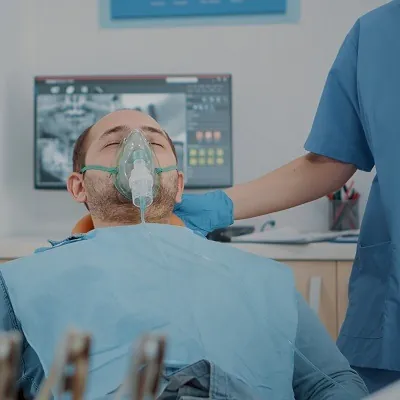
Eager to inquire about: What are the 05 levels of sedation? At Enfield Royal Clinic, we clarify each level- from minimal to general sedation. Explore how each level is distinct in consciousness, respiration, or core mechanisms. Know which option is appropriate for you to ensure security and contentment. Acquire the essential information you require to feel assured prior to your treatment.
What are the 5 levels of sedation?
Have you ever pondered how doctors manage to ensure their patients remain relaxed or well-cared for throughout clinical operations? Sedation does not appear to be one-size-fits-all; instead, it comprises varying degrees. While several individuals view sedation across four phases: minimal, moderate, deep sedation, and general anesthesia, there’s a comprehensive 5-level model, encompassing Monitored Anesthesia Care (MAC). This sedational spectrum spans from slight calmness to entire unconsciousness, with each level adjusted to fit the client and procedural requirements. Below is the guide for each level with a sufficient description:
Level 1: Minimal Sedation (Anxiolysis)
It’s the sedation’s lightest form. Patients are supposed to feel at ease, relaxed, or a bit drowsy. They remain sufficiently conscious to respond and comply with the verbal instructions as usual. The respiratory processes, as well as the cardiac mechanism, are not affected at this level, accrediting it an appropriate approach for minor procedures, such as dental work or diagnostic screening that assist in reducing stress. Cognition and coordination might be slightly impaired, yet mostly operational.
Level 2: Deep Sedation
It brings about a semi-unconscious state where clients only respond to persistent or unpleasant sensations. Patients have slight awareness regarding their surroundings, and voluntary mobility is extremely restricted. Clients might struggle with adequate respiration, necessitating supplemental oxygen or airway assistance. Continuous monitoring is required and typically reserved for those procedures encompassing intense relaxation, such as joint adjustments or intricate minor operations.
Level 3: Monitored Anesthesia Care (MAC)
Being an innovative approach, it equips patients with the option of remaining entirely, partially conscious, or minimally sedated, with efficient pain regulation. The sedational intensity is constantly modified by the anesthesiologist to accommodate the procedure and the client’s requirements. Healthcare providers cautiously monitor breathing and core functions the whole time. It is often utilised for procedures that do not require an individual to be hospitalised or minor operations that could be seamlessly performed without complete anesthesia.
Level 4: Moderate Sedation (Conscious Sedation)
This level is categorised by a drowsy state along with slight detachment of the patient from his surroundings. Even being sleepy, patients still react to oral instructions or subtle touch. Patients generally breathe without assistance, and cardiac activity remains steady. It is typically utilised for minor procedures, endoscopic treatments, or a client is ensured to stay composed regardless of being entirely unaware.
Level 5: General Anesthesia
Patients are entirely asleep or unresponsive to external stimulation. They neither encounter any painful sensations nor have any procedural memory. Respiratory assistance is generally required, such as breathing tube insertion. Cardiac rate, blood pressure, and breathing mechanisms are attentively observed. Generally, it is utilised in case of major operations, maintaining the patient’s relaxation while inducing an intense unconscious state.
Take the Stress Out of Your Procedure – Learn About Sedation!
Procedures do not necessarily have to be distressing. Whether you are mildly drowsy or entirely asleep, the appropriate sedation ensures a secure, untroubled, or worry-free experience. Our professionals at Enfield Royal Clinic, offering various Sedation Dentistry services, adjust sedation to manage your individualised requirements. Lock in your consultation now!