Troubled by prominent operative-scars? Feeling yourself at unease regarding your textural appeal? Our DHA-licensed surgeons at Enfield Royal Clinic utilise premium surgical scar revision techniques to securely polish, renew, and enhance your skin’s appearance, minimising scar profile and reinstating a seamless finish.
Quick Facts!
💰 Cost: AED 800-AED 2,000/ session.
✨ Treatment Aims: Enhances the obvious scars’ appearance, lessens discolouration or redness, and facilitates scar blending with adjacent skin to ensure an authentic appearance.
🧪 Treatment Plan: Generally, 1-3 sessions are suggested; maintenance sessions might be advised every 6-12 months for optimal effects.
⏱️ Duration: 30-60 minutes each session, influenced by the scar size and the utilised technique.
🏷️ Techniques/Options: Typical approaches involve laser resurfacing, microneedling, surgical excision, corticosteroid injections, and dermal fillers.
🏥 Setting: Outpatient procedure; conducted in a licensed aesthetic or dermatology clinic.
💉 Treatment Details: This treatment is personalised in accordance with the location, scar type, and skin condition. Multiple techniques might be integrated for optimal outcomes.
What is Surgical Scar Revision?
Surgical scar revision appears to be a specialised clinical procedure focused on inducing major improvements regarding appearance, textural improvement, and scars’ visual prominence resulting from trauma, prior surgery, or skin-associated concerns. It involves the utilisation of premium techniques, such as skin grafting, Laser Treatment, surgical excision, or dermabrasion, etc to assist scar integration seamlessly with the adjacent skin. Though scars are considered a typical part of the recovery, revision surgery diminishes their visual impact while optimising the entire aesthetics. This approach is personalised in accordance with the scar type, dimensions, and placement.
What is a Scar?
Scars are characterised by persistent tissue alterations that appear on their own while the body repairs itself post-injury or surgery. Their formation is triggered by injury to the innermost tissue layer (dermis) and collagen synthesis, which induces changes in the skin’s appearance (thickness, texture, colour). Scar formation is often linked to aspects that involve:
- Wounds’ positioning and intensity.
- Skin type.
- Health profile.
- Genetics.
- Aging processes.
- Recovery complications.
A. Possible Causes
These cover:
- Injuries sustained from trauma or accidents.
- Burns or heat-associated injuries.
- Intense acne or skin infections.
- Extensive or substantial wounds that adversely affect the dermis.
- Skin type, age factors, or ethnicity.
- Operative incisions or clinical procedures.
- Genetic aspect or hereditary history.
B. What are the major characteristics of scars?
These involve:
- Redness 🡆 all scars tend to possess redness initially, but it typically subsides within 6-12 months. Durable redness is restricted to fair-skinned individuals or prolonged UV exposure.
- Depression (atrophy) 🡆 compromised collagen formation, can enable scar to appear recessed, often noticed post-chickenpox or intense acne.
- Textural Abnormalities 🡆 accelerated collagen development in the healing phase can contribute to bumps, ridges, and pits throughout the scar. These irregularities might occasionally be both tactile as well as apparent, unfortunately.
What Scars Can Be Treated with Cosmetic Scar Revision?
The scar remodelling surgery can effectively cater to the following scar types:
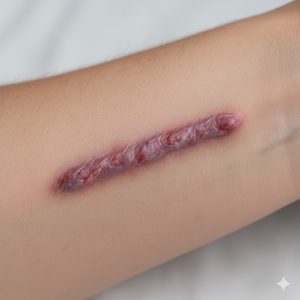
| Hypertrophic Scars
Elevated and red scars that remain restricted or confined to the initial injury. |
Surgical Scars
Various surgical scars can be revised to achieve improved aesthetics. |
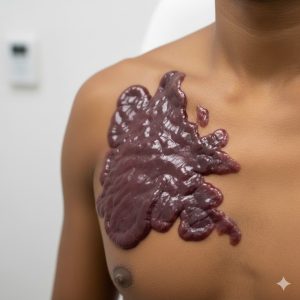
Keloid Scars
Thickened, raised scars that surpass the original wound margins. |
 |
 |
 |
| Burns Scars
Burn-linked scars that induce stiffness and impact mobility. |
Contracture Scars
Typically resultant from burns, these scars can induce excessive tightness and potentially lead to functional impairment. |
Facial Scars
Scars, mainly on the facial region, can impact self-assurance as well as visual appeal. |
 |
 |
 |
Benefits of Scar Reduction Procedure
This surgical scar removal procedure entails significant appeal because of serving the following purposes:
1️⃣Improved Visual Appearance
This procedure significantly contributes to creating a proportioned and cohesive visual display by improving the seamless integration of scars with nearby skin, thus diminishing their apparentness.
2️⃣Enhanced Self-Assurance
Another positive is that it notably decreases self-consciousness and improves psychological wellness, as the reduced scars’ appearance is often linked with positive self-perception.
3️⃣Persistent Scar Integrity
Thai treatment effectively lessens the probability of scar expansion, tissues’ overdevelopment, and reemergence over period for the fact that surgical techniques deliver focused wound suturing and facilitate structured collagen arrangement.
4️⃣Upgraded Skin Texture
By improving the irregularities that could be pits, ridges, or raised zones, this procedure results in a consistent/ balanced dermal surface.
5️⃣Restored Functional Capabilities
Lastly, the employment of scar repair techniques serve their part in reestablishing mobility and stretchiness. Also, this promotes bodily functionality and lessens limitations induced by stiffened scar tissues.
Am I a Good Scar Revision Candidate?
Still unsure whether you fit the scar correction surgery candidacy? Below are the points that an individual requires to tick prior to receiving this procedure:
✔️Completely Healed Scars– individuals who possess entirely recovered scars prior to treatment.
✔️Medicational Considerations– those who are contemporarily intaking oral retinoids (Accutane) are advised to observe a waiting period post-discontinuing them prior to treatment.
✔️Realistic Expectations– additionally, those people who comprehend the achievable outcomes of the scar revision surgery.
✔️Aesthetic Concerns– persons who desire to enhance their visual outlook or encounter appearance-associated concerns or uncertainties.
✔️Without Active Skin Infections— anyone who is experiencing acne flare-ups and chronic skin concerns is discouraged from opting for this treatment.
✔️Optimal Physical Wellness– Individuals possessing optimal bodily wellness are designated as appropriate candidates.
✔️Functional or physical Concerns– adults having scars, causing considerable irritation, discomfort, or limited mobility, might be addressed operationally.
✔️Lifestyle Considerations– Non-smokers or those persons entailing willingness to halt smoking around the operational timeframe.
When Should You Consider Scar Correction Surgery?
If you are affected by the concerns, then it might be an indication to receive cosmetic scar revision:
- Prominent or uneven scars impacting your entire profile.
- Mobility restrictions arose from contracture scars.
- Chronic scars emerged due to burns, trauma, acne, or surgery.
- Psychological distress that impacts self-esteem.
Pre-care: What You Need to Follow Before Treatment
🡆 Weeks Before Surgery
- For optimal healing and lessened complications, discontinue nicotine intake.
- To prep your body, limit vigorous activities.
- Keep your healthcare provider sufficiently updated regarding your clinical record, medications, and prior health concerns.
- Completion of pre-operative screening (ECGs or X-rays) is encouraged as per your surgeon’s directions.
🡆 Week of Surgery
- At home, set up a relaxing healing space with icepacks, a thermometer, pillows, and a phone within proximity.
- Religiously adhere to medicational usage as per your healthcare specialist’s directions.
- It is advisable to keep a responsible adult or friend with you to accompany you home and stay nearby for 24 hours.
🡆 Day of Surgery
- Ensure reaching out at the scheduled time set by your surgeon.
- It is extremely encouraged to adhere to wholesome meals alongside sufficient hydration for energy preservation and regulated glucose levels.
What to Expect During Surgical Scar Revision
It comprises the following stages:
Initial Consultation
The procedure initiates with the precise evaluation of your scar, objectives review, and confirmation of procedural appropriateness. An individualised treatment strategy is created post-analysing the client’s clinical record, current medications, allergies, etc.
Area Preparation
This step features thorough cleaning as well as preparation of the treatment zone.
Anesthesia Administration
To lessen discomfort or unease, the client is anaesthetised with options that involve local injections, light sedation, or surface numbing, determined by the employed procedural technique.
Scar Assessment & Marking
Post-detailed evaluation of the scar along with adjacent tissues, the surgeon maps out the precise regions for revision. It is intended at ensuring symmetry, accurate positioning, and optimal outcomes.
Scar Revision
Afterwards, the scar is corrected via procedures that primarily involve excision, tissue rearrangement, or dermal repositioning. Precise surgical intervention is ensured for discomfort relief.
Closure & Dressing
Upon revision’s completion, the treated region is cautiously sealed with sutures and other closure techniques. Besides, the bandage wraps the area to assist the initial recovery.
Types of Scar Repair Techniques
These can be grouped into:
- Surgical Scar Revision Techniques
- Non-Surgical Scar Revision Techniques
A. Surgical Scar Revision Technique
- Scar Excision: Operatively excises previous scar tissues and meticulous wound suturing to create a refined appearance.
- Tissue Expansion: Progressive tissue expansion bordering the scars to repair enlarged scarred defects, often utilised for burns or extensive scarring.
- Dermabrasion (Surgical): Utilises mechanical abrasion to even out elevated or irregular scar tissues, usually requiring other invasive techniques for optimal effectiveness.
- Z-Plasty / W-Plasty: Scar repositioning to reduce stress, improve aesthetics, and mobility in regions with continuous movement.
- Skin Grafting: Harvests skin from other bodily regions to replace the scarred skin
B. Non-Surgical Scar Revision Techniques
- Laser Treatments (Fraxel, DeepFX, Vbeam): Stimulate collagen reorganisation while diminishing redness and optimising dermal surface and uniformity.
- Fillers / Skin Boosters (Bellafill®, Rejuran, Ellansé): Correct depressed scars and reinstate tissues’ fullness to attain the polished finish.
- Subcision: Releases fibrous attachments beneath adhered scars, frequently utilised alongside laser therapy or fillers for optimal remodelling.
- Microneedling / RF Microneedling (Morpheus 8): Elevates collagen regeneration to lessen the depth as well as scar adhesion.
- Triamcinolone & 5-FU Injections: Assists in flattening keloids or hypertrophic scars and relieves inflammation or itchiness.
- Topical & Physical Treatments: Incorporate steroid creams, compression therapy, silicone gels, cryotherapy, and chemical peels to lessen scar elevation, redness, or pigment alterations.
Results and Benefits:
Results:
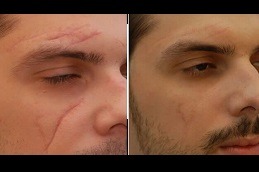
The results vary from person to person. Each individual comes up with different results as it depends on the size, appearance and health condition of the patient. The cause of the scar also plays a significant role in delivering diverse results. Enfield Royal Clinic is delivering long-lasting results in collaboration with the expert team and surgeon. It may take months to fully heal and fade the scars.


Postcare After Surgical Scar Revision
Once you are done with your scar revision, then compliance with certain guidelines is essential to keep aside complications and to optimise recovery:
🡆 Scar & Incision Care
- Observe proper cleanliness of the treated zone.
- Neither scratch nor press the operated site.
- It might be encouraged to practice mild massage upon initial recovery.
🡆 Dressings & Protection
- Leave the bandage untouched until instructed.
- Safeguard the scar from sun-contact as well as from friction.
🡆 Pain & Medication
- Abide by the dosing guidelines regarding your analgesic medications.
- Utilise OTC (over-the-counter) medications solely once instructed by your surgeon.
🡆 Hydration & Activity
- Observe adequate fluid intake for optimal recovery.
- Hold off the intense workouts, stretching, or lifting for the initial 2 weeks.
🡆 Monitoring & Follow-Up
- Be vigilant for atypical indications, such as redness, inflammation, or infections.
- Go back for review appointments to achieve optimal effects.
Recovery After Plastic Surgery for Scars
Immediate (Day 0–2)
|
🡇
Early (Day 3–7)
|
🡇
Initial (Week 2–4)
|
🡇
Intermediate (Month 1–3)
|
🡇
Long-Term (Month 3–12)
|
Risks & Complications
Apart from various positives, this surgery might also induce certain negative effects:
- Operative site infections.
- Sedational reactions (dizziness, nausea).
- Troubled or compromised wound recovery.
- Pigmentation variations.
- Scars recurrence (particularly keloids).
- Intensive bleeding.
- New scars’ development.
- Post-treatment tenderness or discomfort.
- Neural trauma.
Surgical Scar Revision Cost in Dubai
In Dubai, the average pricing for surgical scar revision commences from AED 800 and might surpass AED 2,000 each session. Final expenses are determined by comprehensively assessing the aspects that involve scar size, clinical expertise, employed technique, and individualised requirements. A thorough price summary is tabulated as follows:
| Treatment Approach | Approximate Cost |
| Single Scar Revision Session | AED 800–AED 1,800 |
| Multiple Small Scars Session | AED 800–AED 2,500 |
| Laser-Assisted Scar Revision | AED 1,200–AED 3,000 |
| Follow-Up / Touch-Up Session | AED 500–AED 1,500 |
Transform Scarred Skin into Flawless Confidence– Reserve Now!
Your scars are worthy of professional assistance and precision. Level up your skin’s profile and revive smoothness with our superior surgical scar revision treatments in Dubai. Our licensed surgeons or Dermatologists, having recognised expertise, dedicatedly provide accurate treatment to reduce scars’ prominence, renew texture, and revive your skin’s innate outlook. Reserve your slot straight away. Our staff ensures 24/7 accessibility to assist you with your queries. Schedule now!
FAQs
Which appears to be the optimal surgical option for scar elimination?
It is determined by the scar type, its positioning, and personalised aspects. Options might involve Laser therapy, scar excision, dermabrasion, and Z-plasty.
Can surgical scar revision equally cater to the stitches-induced scars?
Surely, it can considerably assist them to blend with theadjacent skin, thus appearing less pronounced with a refined texture.
By utilising silicone products, how can scars be tackled or diminished?
Bringing about minimal skin stretchiness, facilitating collagen restructuring, and lessening scar thickening over a period, silicone sheets or creams influence scars’ prominence.
How can steroid injections contribute to scar management?
They operate by weakening excessive collagen bonds as well as inflammation and redness encompassing the raised scars.
What serves as the appropriate time to address scars post-surgery?
Prompt intervention delivers the optimal outcomes and should typically be initiated 6 weeks post-surgery.
Can scars’ apparentness be lessened by certain home remedies?
Practicing wounds cleanliness alongwith ensuring they should be intervaly mositurized with petroleum jelly can alleviate scar symmetry and prevent it from intensifying.
On average, how much is a person obliged to pay for surgical scar revision?
AED 800-AED 2,000 is regarded as a typical pricing bracket for scar correction, while it is finalised post-analysing various aspects, such as scar size, individualised aspects, clinical competence, and deployed techniques, etc.
Dr. Sannia Awais
Dr. Sannia Awais has a wider experience in the field of Aesthetic Medicine, Hair restoration,... Dr Mahmoud Akrama
Dr. Mahmoud Akrama is a skilled general physician who specializes in aesthetic medicine and laser... Dr. Ahmed Naji Attiyah
We proudly announce yet another addition to the Enfield Royal Clinic family. Dr. Ahmed Naji... Dr. Osama Shaheen
“Your smile deserves the best dentist, Dr. OSAMA SHAHEEN, who crafts Confident Smiles with Precision... Dr. Tamim Hasan
“Dr. Tamim Hasan– an experienced and expert dentist committed to delivering precise and compassionate dental... Dr. Leen Makhlof
Looking for a reliable, experienced specialist in Dubai for your skin health? Choosing a dermatologist... Dr. Sirouse Ghouchkhani
Book an Appointment Request appointment information Dr. Sirouse Ghouchkhani Lead Plastic & Reconstructive Surgeon Speciality: Plastic...