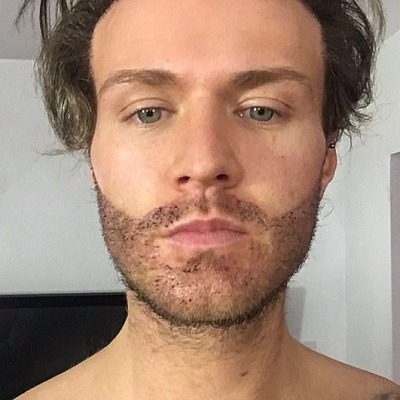


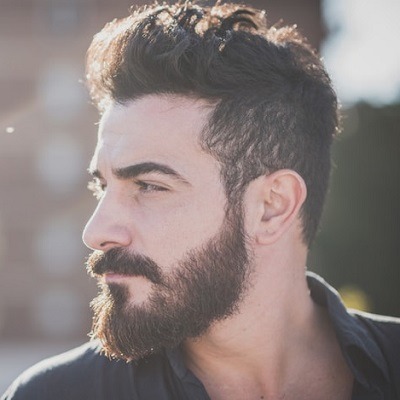
A beard hair transplant in Dubai is a facial hair restoration procedure that moves healthy hair follicles from a donor area, usually the scalp, to areas of the face with sparse, patchy, or absent beard growth. The transplanted follicles can restore density to the beard, cheeks, jawline, chin, moustache, goatee, and sideburns.
A beard transplant in Dubai can help men who have naturally sparse facial hair, uneven beard growth, gaps in the beard or moustache, or facial hair loss caused by scars, burns, or injuries. The surgeon plans the graft placement according to the existing beard pattern, facial structure, desired density, and natural direction of facial hair.
The procedure uses follicular hair grafts that are carefully extracted from the donor area and implanted into the recipient areas. Precise placement is important because beard hair grows at specific angles and directions. The goal is to create facial hair that blends with the existing beard and can be trimmed, shaved, and styled after healing.
Results of Beard Transplant:
Beard transplant results develop gradually over several months, with the final appearance continuing to mature for around 12 months. The transplanted hair shafts may shed during the early post-transplant period, while the transplanted follicles remain in the skin and can produce new hair during the subsequent growth phase.


Aim of the Treatment:
The aim of a beard hair transplant is to increase facial hair density, fill visible gaps, and create a more even and naturally shaped beard.
The treatment can be planned for different facial-hair concerns, including:
- Patchy beard growth: Fill areas where beard hair is sparse or absent.
- Thin facial hair: Increase density in areas with limited natural growth.
- Cheek gaps: Add hair to sparse sections of the cheeks.
- Weak jawline coverage: Improve hair density along the jawline.
- Moustache gaps: Restore or increase hair density in areas of the moustache.
- Beard and moustache connection: Improve gaps between the moustache, beard, and surrounding facial hair.
- Scar-related hair loss: Restore hair in selected areas affected by burns, injuries, or scars.
- Beard shape: Create a more defined beard outline according to the patient’s facial structure and treatment goals.
A beard transplant does not create new hair follicles. It redistributes healthy donor follicles to areas where additional facial hair is required.
Who May Not Be Suitable for a Beard Hair Transplant?
A beard hair transplant may not be suitable when the donor area cannot provide enough viable follicles or when an underlying condition makes transplantation inappropriate at the time of assessment.
The procedure may be considered if you:
- Have naturally sparse or patchy beard growth.
- Have uneven facial hair density.
- Have gaps in the beard, moustache, chin, or cheek area.
- Want to increase beard density.
- Want to improve the shape or pattern of your beard.
- Have facial hair loss caused by a stable scar, burn, or injury.
- Want to restore a moustache or improve the beard-to-moustache connection.
- Have sufficient healthy donor hair for transplantation.
- Want a long-term facial hair restoration option.
Suitability is determined during a consultation. The surgeon assesses the donor area, existing facial hair, skin condition, treatment area, expected graft requirement, and desired beard design before recommending a treatment plan.
Pre-Surgery Instructions:
Preparing for a beard hair transplant involves reviewing your medications, following the clinic’s instructions, and keeping the donor and recipient areas suitable for treatment.
Before your beard transplant in Dubai, follow the instructions provided by your surgeon. These may include:
- Do not take aspirin-containing medicines 10 days before the transplant.
- Patients are suggested not to take alcohol 2 days before the surgery
- Avoid Inflammatory medications
- Take necessary vitamins to help in the healing process
- Do not take caffeinated beverages on the day of surgery as it will increase bleeding
Beard Hair Transplant Procedure:
A beard hair transplant involves assessing the donor area, designing the beard, extracting follicular grafts, creating recipient sites, and implanting the grafts according to the natural direction of facial hair.
1. Consultation and Beard Design
The surgeon evaluates your beard growth, donor hair, facial structure, skin condition, and treatment goals. The beard shape, treatment areas, density, and graft requirement are then planned according to your facial structure and existing hair pattern.
2. Donor Area Preparation and Graft Extraction
The donor area, usually the back or sides of the scalp, is prepared for extraction. With FUE, individual follicular units are carefully extracted using small extraction instruments and prepared for implantation.
3. Recipient-Site Creation and Graft Implantation
Tiny recipient sites are created in areas requiring restoration. The grafts are then implanted individually according to the natural angle, direction, and distribution of facial hair. This helps the transplanted hair blend with the existing beard.
4. Immediate Aftercare
After implantation, the treated areas are checked and postoperative instructions are provided. These instructions focus on protecting the grafts and supporting the initial healing process.
A beard transplant requires precise graft placement because facial hair grows at a flatter angle than scalp hair. The angle, direction, and distribution of the grafts influence the natural appearance of the beard.
How Many Grafts Are Needed for a Beard Transplant?
The number of grafts needed for a beard transplant depends on the size of the treatment area, existing facial hair density, desired fullness, donor hair availability, and planned beard design.
A patient who wants to fill a small cheek patch may require substantially fewer grafts than someone seeking restoration across the cheeks, jawline, chin, moustache, and sideburns.
| Beard concern | Graft requirement depends on |
|---|---|
| Small patch | Size and location of the missing area |
| Cheek gaps | Existing cheek density and desired fullness |
| Moustache restoration | Existing moustache density and treatment area |
| Jawline or sideburn restoration | Length and width of the area requiring coverage |
| Beard and moustache restoration | Combined treatment areas and desired density |
| Fuller beard restoration | Overall facial-hair coverage and available donor follicles |
The exact graft requirement is determined during consultation. The surgeon evaluates the donor area and maps the recipient areas before establishing an individualized treatment plan.
Graft planning is important because using more grafts does not automatically produce a better beard. The surgeon must balance the desired density with available donor hair and natural hair direction.
Post-Surgery Instructions:
Postoperative care protects the newly implanted grafts during the early healing period and helps reduce unnecessary irritation of the treated area.
After your beard hair transplant, follow the specific instructions provided by your surgeon. Common postoperative precautions include:
- Keep the transplanted area away from the sunlight
- Avoid lifting any kind of weight
- While sleeping much care is needed
- Buy recommended medications in case if you feel any pain in the future.
- Avoid unnecessary touching on the transplanted area
- Avoid consuming Minoxidil containing products.
- Antibiotics are not allowed to use
Medication and aftercare instructions can vary between patients, so your surgeon’s postoperative plan should take priority over general recommendations.
Beard Hair Transplant In Dubai FAQ’s
How Much Does a Beard Hair Transplant Cost?
The cost depends on the treatment area, graft requirement, donor hair availability, technique, and individual treatment needs. A small patch correction may require fewer grafts than a full beard or beard-and-moustache restoration.
Do Hair Transplants Work for Beards?
Yes, hair transplantation can restore facial hair by moving viable follicles from a suitable donor area to areas with sparse or absent beard growth. The transplanted follicles can grow hair in the treated area.
How Much Is A Beard-To-Head Transplant?
A beard-to-head transplant uses beard hair as a donor source for scalp restoration and differs from a standard beard transplant. Suitability depends on donor hair characteristics, scalp condition, hair loss, and treatment goals.
What Is a Beard and Moustache Transplant?
A beard and moustache transplant increases hair density in both areas using transplanted follicular grafts. Grafts can be placed to fill gaps, improve density, and create a natural transition between the moustache and beard.
The required grafts depend on the treatment area, existing density, donor hair availability, and desired result.
Recovery:
Most patients can return home after a beard hair transplant, while the transplanted area heals progressively over the following days and weeks.
During the initial recovery period, the treated area may develop temporary redness, swelling, tenderness, itching, or small scabs. These effects generally improve as the skin heals.
The transplanted hair shafts may shed during the early growth cycle. Shedding does not necessarily mean that the transplanted follicles have been lost. New beard hair develops gradually from the transplanted follicles over the following months.
Recovery and regrowth vary between patients. Your return to work, exercise, shaving, and other normal activities should follow the specific timeline provided by your surgeon.
Consult our Best Beard Transplant Surgeon:
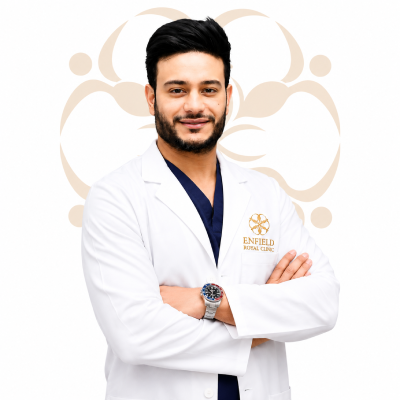
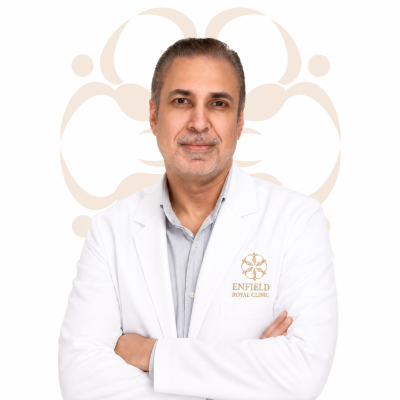
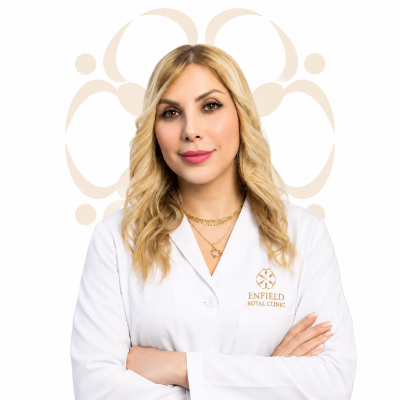
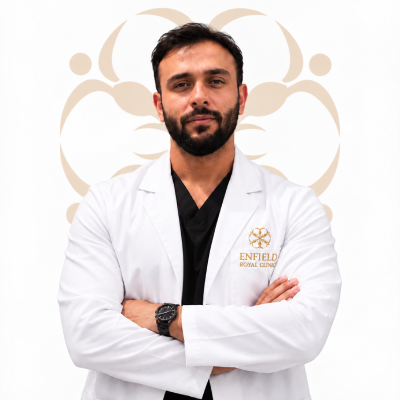
Royal Clinic Dubai provides beard hair transplant treatment for men seeking to restore sparse, patchy, or uneven facial hair growth in Dubai and Abu Dhabi.
During your consultation, the specialist assesses your facial hair pattern, donor area, treatment goals, expected graft requirement, and suitability for transplantation. The treatment plan can then be tailored to the areas requiring restoration, including the beard, cheeks, jawline, chin, moustache, goatee, and sideburns.
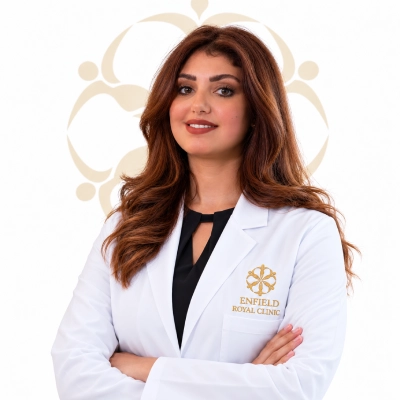
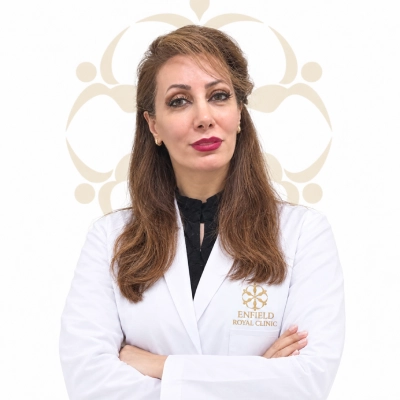
Dr. Sannia Awais
Book an Appointment Request appointment information Dr. Sannia Awais Cosmetic Dermatologist and Hair Specialist Speciality:... Dr Mahmoud Akrama
Book an Appointment Request appointment information Dr Mahmoud Akrama Dermatologist and General Practitioner Speciality: General Practitioner,... Dr. Tamim Hasan
Book an Appointment Request appointment information Dr. Tamim Hasan DHA-LICENSED DENTIST Speciality: Cosmetic Dentistry and... Dr. Leen Makhlof
Book an Appointment Request appointment information Dr. Leen Makhlof Dermatologist and Nutritionist Speciality: Dermatology and nutrition... Dr. Sirouse Ghouchkhani
Book an Appointment Request appointment information Dr. Sirouse Ghouchkhani Lead Plastic & Reconstructive Surgeon Speciality: Plastic... Dr. Hemissi Bilel
Book an Appointment Request appointment information Dr. Hemissi Bilel Lead Aesthetic & General Dentist Speciality:General... Dr. Mohamad Sameer Alsalih
Book an Appointment Request appointment information Dr. Mohamad Sameer Alsalih Dermatologist and Aesthetic Skin Specialist... Dr. Mahya Kanani
Book an Appointment Request appointment information Dr. Mahya Kanani Obstetrician & Gynecologist Speciality: Cosmetic Gynecology... Dr. Kian Goudarzi
Book an Appointment Request appointment information Dr. Kian Goudarzi Lead Dermatologist | General Practitioner Speciality: Aesthetic... Dr. Elissa El Ahmadieh
Book an Appointment Request appointment information Dr. Elissa El Ahmadieh Clinical Dietitian, Head of Diet... Dr. Atena Shafaei
Book an Appointment Request appointment information Dr. Atena Shafaei Consultant Obstetrician & Gynecologist Speciality: Obstetrics &...

Schedule a Free Consultation
Enfield Royal Clinic Dubai offers beard hair transplant in Dubai for patients seeking fuller and more evenly distributed facial hair. Contact our team to discuss your beard transplant goals, treatment suitability, expected recovery, and beard transplant cost in Dubai.