


Are you concerned about delivery complications and challenging labor? Reliable and effective delivery management is crucial for both mother and child. At Enfield Royal Clinic, our experienced gynecologists or surgeons utilize premium techniques for secure, controlled, or well-managed deliveries.
Essential Highlights
- Treatment Goals: Promote secure childbirth, support maternal or newborn wellbeing, and lessen complications.
- Estimated Cost: AED 12,500 to AED 20,500, determined by surgical complexities or hospital services.
- Procedural Duration: Typically, 45-90 minutes, influenced by operation challenges and medical considerations.
- Recovery Period: 01-02 weeks for observable healing and progressive return to usual activities.
- Operational Security: Conducted by DHA-certified obstetric surgeons.
What is a Cesarean Section?
Cesarean Section, typically referred to as “C-Section,” is a surgical technique where a baby is delivered via creation of abdominal or uterine incisions if a vaginal birth (normal delivery) does not appear to be a secure option. Determined by the maternal or fetal conditions, it may occur as planned (elective) or unplanned (emergency). The selection of expert Obstetrics & Gynecologists is an essential choice that must be made.
The ultimate decision regarding the delivery approach must be made with your physician, who is supposed to explain in detail the positives and negatives of both options (vaginal birth vs Cesarean section). It can be either:
C-Section Type | When Performed | Typical Reasons |
| Planned (Elective) | Prior to labour, generally at the 38th week. |
|
| Unplanned (Emergency) | In the course of labor, if complications emerge. |
|
Medical Reasons for a Caesarean Section
It might be advised by the doctor to opt for a C-section if a normal delivery could lead to intense or adverse health complications for the mother as well as the child. General reasons involve:
- If a female is pregnant with twins or carries multiples, particularly if the first baby does not assume a head-down position.
- The possibility of transmission of maternal infections to the baby.
- Stalled or troublesome labor endangers both the mother and the baby.
- Excessive vaginal bleeding while giving birth.
Benefits of C-Section
This delivery approach carries multiple positives, which are noted below:
Prioritizes Mother & Baby Wellbeing
This approach is crafted in a way that effectively safeguards the mother and neonatal wellbeing, managing potential hazards in complex delivery scenarios.
Minimizes Childbirth Complications
Another positive aspect of this technique is that it lessens the probability of labor-associated medical concerns, such as labor obstruction, excessive/ intense bleeding, etc.
Prevents Labor-Associated Trauma
It effectively tackles the labor strain, bypassing the prolonged and challenging delivery experience, thus reducing stress or potential trauma for the child as well as the mother.
Optimizes Safety in Multiple Pregnancies
Operative intervention enables precise management of twins or multiple gestations, particularly if the fetal position seems to be unusual.
Managed & Predictable Delivery
This procedure facilitates structured coordination and supervision, hence guaranteeing a regulated or professionally overseen delivery.
Safeguard Infants against Infections
C-Section efficiently minimizes the possibility of infants obtaining certain sorts of infection from maternal interaction while in labor.
- Reliable Option for Repeat C-Section Births
It emerges to be a dependable delivery mode specifically for females who have previously delivered a baby via surgical operation.
Types of Cesarean Section
It can be classified into various options, determined by incision type or surgical indications, as follows:
A.Classification by Uterine Incisions
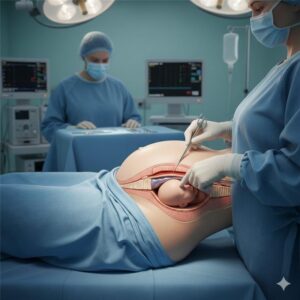
- Lower Segment Cesarean (LSCS): It entails the administration of horizontal cuts/incisions along the lower uterine portion. It is effective in the promotion of optimal recovery, reduction of scar development, and is linked with enhanced security in subsequent pregnancies.
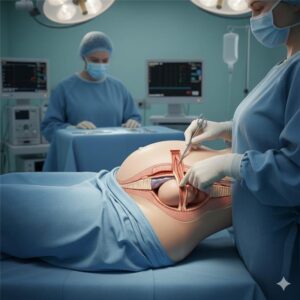
- Classical Cesarean: It indicates the formation of vertical incisions at the upper uterine segment. Though it facilitates rapid access or swift delivery, it carries elevated bleeding probabilities and potential uterine concerns.
B.Classification by Indications
- Emergency C-section: It refers to an unscheduled operative delivery that is carried out when labor-linked concerns compromise the mother’s or baby’s wellness. It serves as an efficient option in case of fetal instability, labor obstruction, or placental insufficiency.
- Elective C-section: This approach pertains to the scheduled operative birth prior to baby onset, usually for personal preferences, clinical, or obstetric reasons. It enables regulated preparation, optimised security strategies, or collaborative pregnancy or birth-associated care.
Abdominal Incision Techniques in Cesarean Delivery
- Vertical Midline Incision: A vertical abdominal incision spanning from the navel to the pubic region, facilitating rapid access in critical cases, but leading to apparent scarring.
- Pfannenstiel (Bikini) Incision: Generally identified as “bikini cut”, it appears to be a lower-horizontal incision positioned near the pubic region. It optimizes the recovery process, limits scarring, and is usually favoured for enhanced aesthetic outcomes and fertility preservation.
When to Consider Cesarean Section?
It emerges as a feasible option for secure delivery if a woman fits the requirements outlined below:
- Intense blood pressure or pregnancy-induced hypertension.
- Underlying infectious concerns, such as HIV or Herpes.
- Unusual fetal orientation.
- Prior uterine surgery or a former cesarean.
- Stalled labor due to insufficient cervical dilation or the baby’s position.
- Cardiac or renal disorders complicating vaginal delivery.
- A narrow pelvic passage raising critical concerns for spontaneous delivery.
Pre-Operative Dos
- Talk through your clinical history, allergies, medications, or bleeding concerns with your healthcare professional.
- Let yourself be thoroughly aware of procedural steps, anesthetic options, and potential complications associated with the cesarean procedure.
- Inquire from your doctor about effective measures to regulate pain (ERAC/ERAS) and encourage prompt healing.
- Get done with essential blood tests to assess hemoglobin count and find out your blood group.
- Organize a support person and openly communicate their involvement preferences.
Preparation for a C-Section
It is the step that applies particularly to unintended C-sections, as it indicates the adherence to several steps that an individual is supposed to commit to prior to the surgery:
- For procedure authorization from your side, you will be encouraged to get done with your paperwork.
- Afterwards, you will be aware of the anesthetic choices that typically involve epidural or spinal block to ensure or optimize the numbness of the lower body section while you stay conscious.
- The area where the incisions are intended might have its hair trimmed or shaved.
- To ensure urine drainage, a catheter might be positioned in your bladder.
- Equipment will be attached to watch your cardiac rate or blood pressure.
- For medicational or fluid delivery, an IV drip will be set in your arms or hands.
Numbing Options
For C-sections, two major anesthetic approaches are utilized:
A. Regional Anesthesia
It emerges to be the most preferable choice for planned C-sections, particularly. It further involves:
- Spinal anesthesia– medicational administration in the lower spine to ensure lower body numbness. In it, the patient remains conscious and observes usual breathing patterns. It is probable to experience slight stretching or pulling while delivering the baby, without any significant aching.
- Epidural anesthesia– employed with an existing epidural via a tube to alleviate pain from the waist down.
B. General Anesthesia
It is especially employed in urgent cases as it leaves the individual entirely unconscious. The patient receives oxygen through a mask, while drugs are administered via an IV line. The patient experiences no sensations throughout the surgical operation.
During the Procedure
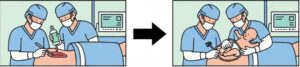
- It initiates with the thorough prepping of the abdominal region with an antiseptic by the surgeon, followed by its covering with sterile drapes.
- To access the uterus, either a horizontal or vertical cut is created in the lower abdominal area.
- Afterwards, an incision in the uterus is performed by the surgeon ahead of the baby’s removal. Additionally, the surgeon releases the baby from the placenta by snipping the umbilical cord.
- The uterus and abdomen are sewn back with sutures and then dressed with a medical wrap.

After the C-Section
- The patient remains under attentive observation until vital signs indicate stability.
- It is encouraged to practice early movements and walking to reduce clots formation and to optimize the healing period.
- The catheter is kept in until the patient is restored to normal sensations in his legs.
- Provision of essential guidelines regarding the thorough cleanliness of the treatment region is guaranteed to prevent infections.
- When required, the patient is provided with pain medications, hydration therapy, and occasionally antibiotics.
- Lactation assistance is ensured, and direct physical closeness with a baby is suggested whenever possible.
- The resumption of eating or drinking is allowed when the patient feels prepared. Some clinics suggest food intake promptly to aid the recovery process.
Special Care for Your Baby Post-Cesarean Section
- Certain C-Section babies might require additional care when it comes to breathing and a brief stay intensive care unit (ICU), but generally reunite with you shortly afterwards.
- If the baby appears to be premature, the patient is administered steroid injections to lessen the respiratory difficulties and to encourage lung development.
- The client’s partner or a support person is typically allowed to accompany the baby.
- Healthcare staff (nurses, midwives) are there to aid you in pumping or collecting breast milk for your newborn, besides assisting in seeing your baby when you feel up to it.
Recovery & Aftercare
| Time Period | Recovery Progress | Postcare for Newly Mothers |
| Hospital Stay (2–5 days) | The wounds begin to heal while consistently monitoring for clotting, bleeding, or potential infections. | Regulate discomfort with instructed medications, maintain incision cleanliness, rest or hydrate adequately, and initiate receiving breastfeeding support. |
| First 1–2 weeks at home | Incisions tenderness, minor puffiness or numbness; reduced energy. | Observe optimal resting period, abstain from lifting weights, walk gently, perform pelvic floor exercises, maintain wholesome food intake, and constantly monitor wounds. |
| Weeks 2–4 | Strength and mobility are enhanced, yet the incision still appears tender. | Continue with routine exercising, put on supportive attire, sustain lactation or skin contact with your baby, and rely on receiving support from caregivers at home. |
| Weeks 4–6 | Optimal movement restoration. | Skip intense driving or lifting, continue mild exercises, engage in support groups, and resume intimate activities when it suits you. |
| Post 6 weeks | The body has reached the optimal recovery, with emotional well-being still in process. | Gradually return to routine activities, attend review appointments, persist with exercising, and seek emotional assistance if required. |
Vaginal Birth after C-Section
Typically, it is referred to as Vaginal Birth After Cesarean (VBAC), indicating normal birth following a previous cesarean. Various women can securely opt for VBAC.
Its Advantages
- Fewest complications.
- Quickest healing for the mother.
- Keeps operational risks, such as infections, intense bleeding, or clotting at bay.
- Usually secure for infants with a reduced possibility of respiratory complications, requiring specialized monitoring.
Associated Risks
There exists a slight possibility of the uterine scar opening in labor, which occurs around 01 in every 200 vaginal birth deliveries. In case it arises, it might lead to severe outcomes, such as hysterectomy or fetal/baby death.
How to Avoid Unnecessary Cesarean
- Allow labor to proceed on its own– until there’s a solid clinical reason to accelerate labor.
- Select fetal observation option– consider occasional monitoring rather than consistent tracking.
- Trust your body– believe in your body’s innate strength for childbirth.
- Be active during labor– adjust posture and utilise contractions in your favor.
- Employ non-medication techniques to regulate discomfort prior to considering the epidural option.
- Epidural management– delay pushing until the baby descends by contractions.
Cesarean Section Cost in Dubai
Usually, it charges around AED 12,500-AED 20,500 for a single Cesarean section in Dubai. The final finances are decided by keeping in consideration– hospital services, surgeon’s expertise, maternity or postpartum care, etc.
Treatment | Estimated Price | Approximate Duration |
| Initial consultation & surgical assessment | AED 1,000 – AED 2,000 | 20–30 minutes (pre‑surgery evaluation) |
| Revision / Additional procedure (if needed) | AED 500 – AED 2,000 | 1–2 hours (in case of additional surgical work) |
| C‑section + enhanced care package (private room, newborn nursery, etc.) | AED 12,500 – AED 18,000 | Includes surgery, 3-day stay, newborn care, meds & basic newborn screening/care |
| C‑section surgery (standard package, 3‑day stay) | AED 18,000 – AED 30,000 | ~2–4 hours (operation + recovery in hospital) |
Experience Luxury C‑Section Care in Dubai- Book Now!
Don’t let doubts regarding childbirth prevent you from thoroughly enjoying your motherhood phase. At Enfield Royal Clinic, our certified obstetricians, or midwife practitioners, and committed staff provide secure, professional, and Cesarean Section in Dubai. Receive personalised assistance, premium operating services, and compassionate post-operative care, ensuring peace and well-being for you and your little champ. Secure your slot now with our professional gynecologists and commence on your parenthood with ease and self-assurance.
FAQs
Typically, how much time is required by the patient to heal from a C-section?
Several weeks might be expected to be observed as the healing duration, with 3-4 days for inpatient care for effective initial assistance.
When should I reconsult with a gynecologist post-Cesarean?
If redness, discharge, intense fever, bleeding, or inflammation is encountered by you, reach out to your healthcare provider.
Do C-sections carry enhanced painful sensations than normal delivery, comparatively?
The patient might not experience any sort of discomfort during surgery, but recovery might be extended or more distressing when compared to the traditional birth pattern.
What complications are likely to emerge that are generally linked with a C-Section?
Certain incision-site infections, blood clot development, scar tissue, or organ trauma are the potential issues that the patient might have to encounter.
I have had a cesarean birth previously, would it affirms it to the delivery mode for the next time also?
Not always, as the patient might be able to deliver vaginaly, determined by her clinical record or previous pregnancies.

Dr. Sannia Awais

Book an Appointment Request appointment information Dr. Sannia Awais Cosmetic Dermatologist and Hair Specialist Speciality:...
View Profile
Dr Mahmoud Akrama
Book an Appointment Request appointment information Dr Mahmoud Akrama Dermatologist and General Practitioner Speciality: General Practitioner,...
View Profile
Dr. Tamim Hasan
Book an Appointment Request appointment information Dr. Tamim Hasan DHA-LICENSED DENTIST Speciality: Cosmetic Dentistry and...
View Profile
Dr. Leen Makhlof
Book an Appointment Request appointment information Dr. Leen Makhlof Dermatologist and Nutritionist Speciality: Dermatology and nutrition...
View Profile
Dr. Sirouse Ghouchkhani
Book an Appointment Request appointment information Dr. Sirouse Ghouchkhani Lead Plastic & Reconstructive Surgeon Speciality: Plastic...
View Profile
Dr. Hemissi Bilel
Book an Appointment Request appointment information Dr. Hemissi Bilel Lead Aesthetic & General Dentist Speciality:General...
View Profile
Dr. Mohamad Sameer Alsalih
Book an Appointment Request appointment information Dr. Mohamad Sameer Alsalih Dermatologist and Aesthetic Skin Specialist...
View Profile
Dr. Mahya Kanani
Book an Appointment Request appointment information Dr. Mahya Kanani Obstetrician & Gynecologist Speciality: Cosmetic Gynecology...
View Profile
Dr. Kian Goudarzi
Book an Appointment Request appointment information Dr. Kian Goudarzi Lead Dermatologist | General Practitioner Speciality: Aesthetic...
View Profile
Dr. Elissa El Ahmadieh
Book an Appointment Request appointment information Dr. Elissa El Ahmadieh Clinical Dietitian, Head of Diet...
View Profile
Dr. Atena Shafaei
Book an Appointment Request appointment information Dr. Atena Shafaei Consultant Obstetrician & Gynecologist Speciality: Obstetrics &...
View Profile
Dr Hamza Saleem
Book an Appointment Request appointment information Dr. Hamza Saleem Hair Transplant Specialist Speciality: Hair Transplantation Nationality: Pakistan...
View Profile


