Frustrated with a persistent tummy ache? Yearning for a secure yet effective method to dissolve gallstones? Gallbladder Stone Surgery in Dubai is what you are seeking. Enfield Royal Clinic features a skilled team of FDA-licensed professionals for accessible or enhanced better wellbeing.
Quick Facts!
- Expected Cost: starts from 25,000AED to 30,000 AED
- Procedural Type: Minimally invasive or open surgical procedure performed by a trained surgeon.
- Required Time: Approximately 2-4 hours based on complexity.
- Hospital Stay: Typically requires a one-night hospital stay for supervision purposes.
- Effectiveness: It effectively clears gallstones while minimizing future complications.
- Healing Period: Several patients need 3-4 weeks, allowing a progressive return to normal routine.
- Numbing Technique: Patients are given complete sedation to ensure a smooth procedure.
What are Gallbladder Stones (Gallstones)?
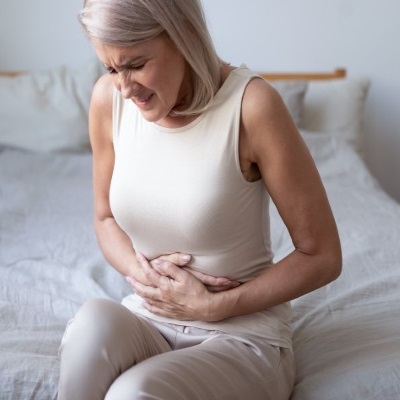
Gallstones are hardened cholesterol or bilirubin deposits formulated in the gallbladder, a compact bile-regulating organ. The liver. Their size can vary, i.e., from tiny to a golf-ball size. The majority of gallstones tend to be painless, thus requiring no treatment at all. When the bile passage is hindered by the gallstones, it causes a sudden right-sided abdominal ache. If left unaddressed, it could result in severe complications.
Types of Gallstones
- Pigment Gallstones– are developed from excessive bilirubin, which is a substance formed from the decomposition of red blood cells.
- Cholesterol Gallstones– are the most common stones that appear when cholesterol is not properly dissolved by the bile.

Possible Causes of Gallstones
The potential factors that lead to the formation include:
- The excessive amount of cholesterol in bile solidifies and develops gallstones.
- The possibility of developing gallstones increases if the bile is not properly flushed out of the gallbladder.
- Gallstones also form if there is an elevated bilirubin buildup.
- Besides them, the factors, such as diabetes, rapid weight reduction, hormonal fluctuations, certain medical ailments ( Crohn’s disease, liver disease, etc), and genetic factors might lead to the emergence of gallstones.
- Females and elderly people are more likely to develop gallstones.
Problems Caused by Gallstones
| Problem | Description |
| Gallbladder Inflammation (Cholecystitis) | Intense fever or pain might be caused by gallbladder obstruction. |
| Pancreatitis | Pancreatic channel hindrance by gallbladder stones results in intense abdominal pain and requires prompt medical attention. |
| Bile Duct Blockage (Choledocholithiasis) | The bile passage blocked by the stones can lead to jaundice, infection, or discomfort. |
| Enhanced Risk of Gallbladder Stones | Though rare, there exist chances of these becoming cancerous. |
Gallbladder Stones Symptoms
- Upper-right abdominal discomfort is especially encountered by an individual after consuming fried or fatty foods.
- Nausea, digestive upset, or vomiting.
- Fever and chills might be experienced by an individual if an infection sets in.
- Back pain or mid-back pain.
- Unusual changes regarding urine or stool (dark or light-colored stools).
Who is more likely to develop Gallbladder Stones?
- Women are twice as susceptible to developing gallstones as men.
- Individuals who are overweight are more prone to gallbladder stones.
- Those individuals who have a genetic history of gallstones.
- Those who have recently lost significant weight.
- The aging factor also contributes notably to gallstone formation.
Diagnosis
Surgery is recommended by the doctor after thorough testing, which might involve:
Abdominal Ultrasound– it employs high-frequency ultrasound waves to properly visualize the gallbladder and detect gallstones.

Cholecystography– a specialized imaging study with dye that tracks the gallbladder’s capability to drain bile into the duct.
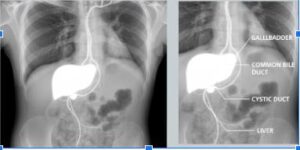
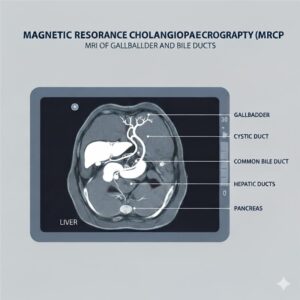
Magnetic resonance imaging (MRI)– it generates gallbladders’ and bile ducts’ high-resolution images via merging a magnetic field and radio waves.
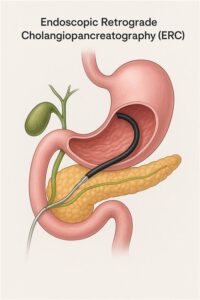
Endoscopic Retrograde Cholangiopancreatography (ERC)– this technique integrates X-rays and endoscopy to spot the bile duct complications and clear out the blockages.
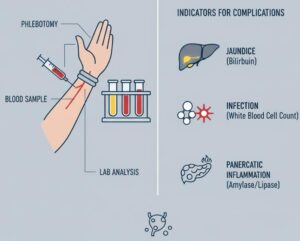
Blood test– it screens for complications linked to gallstones, such as jaundice, infection, or pancreatic inflammation.
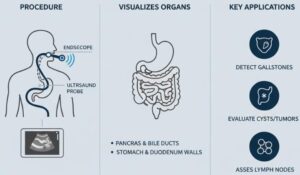
Endoscopic ultrasound (EUS)– if the problem is unable to be detected by the ultrasound, then a camera-tipped endoscope is employed to reveal the tiny stones.
Computerized tomography (CT) scan– it deploys advanced imaging to generate cross-sectional abdominal scans for gallstones detection.

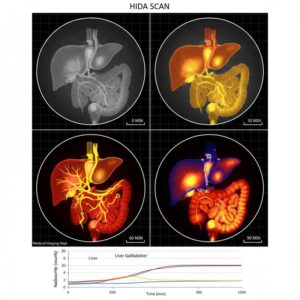
HIDA scan– it involves a specialized nuclear scan to evaluate gallbladder activities and detect bile duct obstructions.
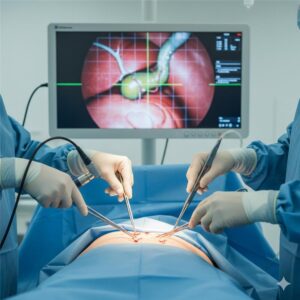
Laparoscopy– it is the latest technique that is intended to remove the gallbladder via a laparoscope (a tiny tube with a camera).
Benefits of this Surgery
- It effectively alleviates the pain caused by gallstones.
- It guards against the complications of infection, pancreatitis, and jaundice.
- It encompasses the swift healing period as it involves small incisions.
- It promotes general well-being by relieving bothersome symptoms, such as nausea, upset stomach, and gut upset.
- Additionally, it restores sound digestion by clearing the bile pathways.
- This surgery significantly improves the body’s capability of processing fats in a better manner.
- Moreover, it serves to be a feasible option as the client does not need to be hospitalized.
Candidacy for Gallbladder Surgery
- Individuals who are experiencing intense or repeated gallstone episodes.
- People encountering disrupted bile flow due to obstruction in the bile channels.
- Those who are suffering from pancreatitis associated with gallstones.
- Individuals who are diagnosed with an inflamed or infected gallbladder.
- People facing immense troubles due to gallstones who do not improve with lifestyle modifications.
Pre-Surgery Instructions
- For 06-08 hours minimum, try not to eat or drink anything prior stone removal operation.
- It is highly encouraged to notify your healthcare expert if you already suffer from a certain disease, such as cardiac diseases, diabetes, etc, to lessen future inconveniences.
- On a prior basis, organized a close one who can accompany or drive you to your home post-operation.
- Select relaxed-fitted or casual attire on the surgery day.
- Sign the consent form as soon as you review the procedural reservations.
- If you are advised to undergo certain clinical tests, you must get them done and bring their reports with you to get them assessed by your surgeon.
Laparoscopy for Gallstones Removal
It is a widely acknowledged procedure as it delivers permanent relief to most of the patients. Let’s break down the procedure to clarify your queries.
Anesthesia: The initial step is where a patient receives general sedation to remain unconscious throughout the surgery.
Operational Incision: Three to four mild cuts are created by the surgeon for inspecting the abdomen to explore complications.
Laparoscope Insertion: A tiny camera-fitted tube (laparoscope) is positioned into the abdomen for assessment purposes.
Surgical Tools Placement: Following this, tiny surgical tools are positioned via tiny entry points.
Gallbladder Extraction: The surgeon cautiously cuts the gallbladder and detaches it along with stones through one of the minor openings.
Inspection & Sterilization: the surgical site is inspected to verify that the area is no leakage or fluid.
Incisions Sealing: It is the final stage in which the mild wounds are secured with medical stitches or glue and then covered with sterilized wraps.

Post-Surgery Nutrition Guide
| What to Eat ✔️ | What not to Eat ❌ |
| Low-fat and easily digestible foods. | Fatty and greasy food. |
| Fiber-filled fruits and vegetables. | High-fat dairy items. |
| Light and portion eating multiple times a day. | Large portions in a single serving. |
| Gradually incorporate previously restricted items. | Heavy eating straight after surgery. |
| Unprocessed grains. | Refined or packaged foods. |
Post-Surgery Healing Timeline
- Initial 24 hours: Rest, hydrate, and Heal.
- Day 01-03: Walk gently, monitor infections, and eat in small portions.
- Week 01: Resumption of light activities and maintaining low-fat nutrition.
- Week 02-03: Stepwise resume mobility and skip intense workouts.
- Week 04-06: Open surgery patients require extra assistance and rest, while laparoscopic patients are allowed to continue their usual activities.
- 02 Months onwards: Complete healing is noticed, reintroduce fatty foods slowly, and return to usual tasks.

Fig: Recovery Timeline of Gallbladder Stone Surgery
Gallstones Prevention
- Commit to a balanced nutrition that emphasizes whole grains, vegetables, and fruits.
- If you intend to lose weight, then avoid adopting any sort of crash diet, as sudden yet immense weight loss might lead to gallstone formation once again.
- Restrict yourself from consuming greasy and processed foods.
- Consistent activity is key to weight and cholesterol management.
Gallbladder Stone Surgery’s Cost
Typically, gallbladder stone surgery costs around25,000 AED to 30,000 AED, while the ultimate price is determined by various aspects, such as:
✅ Procedural complexity & type.
✅ Hospitalization charges.
✅ Additional care & medications.
✅ Supplementary services.
✅ Surgeon’s competence.
Step Towards Relief – Gallbladder Stone Surgery Awaits!
To receive the expert gallbladder stone surgery in Dubai, confirm your slot at Enfield Royal Clinic. Our experts, who are FDA-certified and have considerable experience, are pledged to make your stone journey protected, effortless, and peaceful. So, quit waiting and take the initial step towards optimal wellness.
FAQs
Which foods heighten the likelihood of developing gallbladder stones?
The consumption of concentrated food, such as processed, sugary, or greasy foods, can adversely heighten the gallstone formation.
Can an individual prevent himself from gallstone buildup?
You can lower their production with boosted fibre intake, not skipping any meal, exercising regularly, and managing weight.
Can I expect a normal life when my gallbladder is taken out?
Definitely! As the liver continues to produce bile, which is essential for digestive purposes; however, dietary modifications are crucial to avoid digestive complications.
I fear surgery. Can you please make me aware of the non-surgical options that I can opt for to treat gallbladder stones?
In this particular case, certain medications accompanied by the shockwave therapy emerge as the feasible choices. However, it is unusual and might not work equally for each gallstone case.
How soon can I expect to adopt usual eating patterns post-surgery?
Initially, it is encouraged to opt for meal options with reduced fat, while the usual diet should be incorporated stepwise.
Can surgery lead to noticeable scar formation?
It is also dictated by the surgical approach,i.e, if laparoscopy is employed, scars are not apparent as it involves the tiny incisions. In contrast, open surgery could leave scars that can be spotted easily.
Till when is it safe to take a shower after surgery?
Showering is usually permitted in a day or two post-surgery, but refrain from soaking the incision sites by skipping unnecessary water exposure, that too, for an extended period.
Dr. Sannia Awais
Dr. Sannia Awais has a wider experience in the field of Aesthetic Medicine, Hair restoration,... Dr Mahmoud Akrama
Dr. Mahmoud Akrama is a skilled general physician who specializes in aesthetic medicine and laser... Dr. Ahmed Naji Attiyah
We proudly announce yet another addition to the Enfield Royal Clinic family. Dr. Ahmed Naji... Dr. Osama Shaheen
“Your smile deserves the best dentist, Dr. OSAMA SHAHEEN, who crafts Confident Smiles with Precision... Dr. Tamim Hasan
“Dr. Tamim Hasan– an experienced and expert dentist committed to delivering precise and compassionate dental... Dr. Leen Makhlof
Looking for a reliable, experienced specialist in Dubai for your skin health? Choosing a dermatologist... Dr. Sirouse Ghouchkhani
Book an Appointment Request appointment information Dr. Sirouse Ghouchkhani Lead Plastic & Reconstructive Surgeon Speciality: Plastic...