


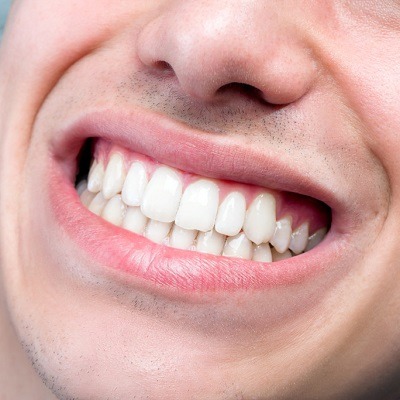
Does struggling with nightly teeth-grinding result in jaw tenderness, head discomfort, disrupting your routine peace? Our qualified Dentists at Enfield Royal Clinic deliver accurate teeth grinding in Dubai so that you can safeguard your teeth’s vitality, reduce irritation, and experience undisrupted sleep. Our DHA-certified professional dentists, by thoroughly analyzing your dental alignment, jaw framework, or grinding tendencies, formulate an individualized treatment approach encompassing clinically validated approaches.
Treatment Overview
Teeth Grinding Treatment is a specialized dental procedure focused at regulating persistent bruxism, safeguarding tooth resilience, and easing jaw stiffness. It involves the employment of various approaches, such as personalized night guards, bite corrections, and precise dental therapies to minimize jaw pressure. It is beneficial for both males and females and might lead to mild, brief soreness and minor jaw tiredness.
Why Enfield Royal Clinic is Your Reliable Partner in Dental Care
Had enough morning jaw stiffness and tightness from sleep-induced jaw stress? We have got you! At Enfield Royal Clinic, our certified Dentists integrate dental precision and client-oriented care to deliver enduring relief from bruxism. Our treatments are specifically designed to safeguard your teeth, ease jaw tension, and reclaim mental calmness in a confidential setup. Here’s why we have earned massive patients:
- Clinical Expertise: Our dental experts have assisted no less than 10,000+ clients to overcome teeth clenching, delivering persistent ease.
- Immediate Jaw Relaxation: From the initial day, you will notice the apparent ease as our approach is focused on relieving jaw tightness and dissolving built-up tension.
- 24/7 Relief: Our premium guards deliver constant protection, being durable, light, and feasible.
- Premium & Trusted Solutions: We provide diverse options, extending from FDA-certified Botox to superior, customized mouth guards.
- Established Trust: The Majority of 5-star reviews reflect our commitment to professional care and consistent outcomes.
- Seamless Day-time Protection: Our refined, transparent guards make it easier for you to perform your routine chores without being hesitant.
- DHA-Registered Technicians: Each guard is precisely formulated by the DHA-authorized technicians to maximize our patients’ contentment.
- Customized Care Approach: Submit your dental impressions, receive your personalized guard, and experience instant relief straight away.
- Affordable Excellence: Expert, superior care inclusive for everyone.
What is Teeth Grinding?
Teeth grinding, also referred to as “bruxism,” is the unintentional pressing or grinding of the teeth, often occurring while asleep and encountering emotional strain. It results in jawache, headache, broken teeth, and disturbed sleep. It is typically triggered by uneven teeth, emotional distress, or other internal medical concerns. If ignored, it might adversely affect dental wellbeing, cause persistent discomfort, and diminish overall vitality. Its management involves the utilization of dental assessment or the adoption of focused strategies to safeguard oral health.

Consequences of Bruxism
Though it appears non-threatening, it can cause certain complications if not given due significance on a timely basis. The complications include:
- Consistent grinding can alter or damage the shielding surface of dental enamel.
- It can overload the jaw joint (TMJ), causing muscle tightness in the neck or shoulder area.
- It may interfere with normal jaw and muscle function, resulting in pain or impairment.
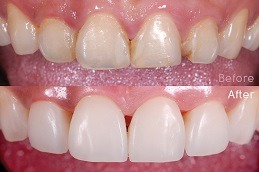
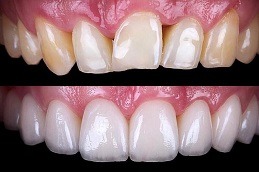
- Over time, it compromises the vitality of the tooth and delivers an unpleasant appearance.
- Bruxism can alter the posture, leading to forward head tilting.
- Majorly, it affects the patient’s sleep schedule and his partner as well.
Results:
The treatment will protect your teeth, enamel, and overall aesthetic appearance. The oral appliance will help distribute the bite force and prevent excessive wear on your teeth and enamel.



Causes of Bruxism (in Adults)
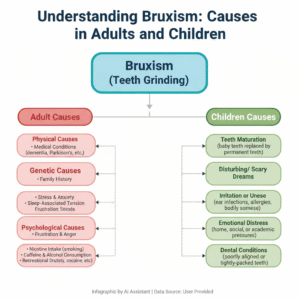
Though the exact cause of bruxism is yet to unfold, there exist various factors responsible for automatic teeth grinding in an individual, mainly involving psychological, physical, and genetic factors. In addition, research indicates that certain behaviours and lifestyle patterns also contribute to developing this concern. These are summarized as follows:
01. Physical Causes
- Sleep disorders (Snoring, sleep apnea)– Muscle stiffness and uncontrolled jaw movement are triggered by the disrupted sleep patterns.
- Medical Conditions– The probability of bruxism is heightened by certain clinical ailments such as epilepsy, dementia, Parkinson’s disease, etc.
- Dental Misalignment– Asymmetrical teeth can considerably contribute to teeth grinding or jaw strain.
02. Genetic Causes
- Family History– Genetic influence is indicated as certain individuals encounter teeth clenching because of inherited genes.
03. Psychological Causes
- Stress & Anxiety– Stress often leads to muscle tightness, enabling an individual to grind their teeth unconsciously.
- Sleep-Associated Tension– Trouble sleeping might lead to brief arousals, resulting in a stiff jaw.
- Frustration & Anger– An individual might show their suppressed emotions via teeth-clenching expressions.
04. Lifestyle Patterns
- Nicotine Intake (smoking)– Our nervous system gets notably stimulated by nicotine, thus enhancing muscle engagement.
- Caffeine & Alcohol Consumption– Amplifies attentiveness and disrupts standard sleep schedule, promoting jaw stiffness.
- Recreational Drugs (ecstasy, cocaine, etc.)– The nervous system gets excessively stimulated by them, inducing unnecessary jaw movement.
Teeth Grinding in Children
Typically, teeth clenching in children occurs in their development phase, and their causative factors differ from those of adults. These mainly include:
- Teeth Maturation– children encounter teeth grinding mainly in the phase when their baby teeth get replaced by mature/ permanent teeth.
- Disturbing/ Scary Dreams– while asleep, unintentional bruxism in children often appears due to frightening dream episodes.
- Irritation or Unease– children consider teeth grinding as their coping strategy when they encounter ear infections, allergies, or other bodily soreness.
- Emotional Distress– similar to grown-up individuals, children also clench their teeth as a reaction to home, social, or academic pressures.
- Dental Conditions– poorly aligned or tightly-packed teeth proportions often contribute to teeth grinding.
What Role Can Parents Perform
If you are noticing that your child is consistently experiencing teeth-associated discomfort, it is essential to let an expert dentist examine him. Besides, you can adopt certain measures to alleviate the intensity and occurrence of teeth pressing, these might involve:
- Integrate regular brushing into the routine practices of your child.
- Restrict their screen exposure, especially prior to going to bed.
- Make it extremely prohibited for your children to consume caffeinated beverages, particularly at night.
- Promote soothing bedtime activities, such as literacy activities or relaxing music.
Identifying the Symptoms of Teeth Grinding
The mere intention of jotting down the points is to prevent our client from encountering teeth-induced setbacks.
- Frequent grinding or clenching of teeth, which results in noise creation– loud enough to interrupt your partner’s sleep quality.
- Apparent inner tooth layers due to damaged enamel.
- Stiff, tired, or fatigued facial muscles.
- Discomfort or tenderness in the shoulder, neck, or jaw zones.
- Persistent buzzing in the ears.
- Cheek injury, discomfort, or chewing trouble as you eat.
- Cracked, broken, or loose teeth.
- Hypersensitive teeth or intense tenderness in the dental region.
- Headaches are often experienced upon waking.
- Interrupted sleep and repetitive night disturbances.
Bruxism Types
It can be split into two categories, primarily:
a. Primary Bruxism
This teeth grinding occurs on its own without any underlying health ailment. Research illustrates that approximately 60% of people encounter primary bruxism while sleeping, usually as their habitual thing.
- Causes: False-positioned bite, cigarette puffing, persistent stress, or alcohol intake.
- Management: As there does not exist any hidden health disorder, it is intended to safeguard jaw muscles and teeth vitality by employing an oral splint or mouth guard.
b. Secondary Bruxism
Generally, it emerges because of certain health ailments.
- Causes: Mental ailments, such as depression or anxiety, neurological illnesses, like Parkinson’s disease, sleep apnea, or the potential downside of certain medications.
- Management: It can be handled efficiently by managing the core problem.
Teeth Grinding: Sleep vs Awake
We are providing the core distinction between sleep grinding and awake grinding so that you can have a clear picture of both, and you can opt for a personalized treatment approach accordingly:
01. Sleep Bruxism
It involves unintentional jaw grinding, especially during the sleep period, and is more adverse than the other one. Its treatment involves the utilization of therapy to reduce its prolonged effects on teeth as well as jaw health.
02. Awake Bruxism
It is the habitual pressing of teeth in daytime that frequently happens when an individual encounters tension, stress, or anxiety. Though it does not require any therapeutic measures to be handled, it might lead to experiencing jaw ache or chewing voices while eating, which sounds extremely inappropriate.
What are the Benefits of Teeth Grinding Treatment?
This treatment is extremely advantageous as it fulfills the following purposes:
- Shields your teeth from strain or structural damage.
- Considerably improves routine ease by reducing headaches associated with teeth clenching.
- Aids in the prevention of additional dental complications, ensuring prolonged oral vitality.
- Relief can be enjoyed for about 3-4 months through injectable treatments, such as Botox prior to requiring any supplementary sessions.
- Significantly promotes the life’s quality by providing a prompt dental functionality, heightened self-esteem, and restored well-being.
- Restores discomfort in the regions, such as the shoulders and neck, by providing essential relaxation to the muscles.
- Notably plays a crucial part in promoting sleep quality, enabling you to regain alertness or spark.
- It does not entail an essential resting period as the client is always permitted to reinitiate routine operations.
Perfect Candidates for Teeth Grinding
Below are the individuals who must consider receiving this teeth-clenching therapy:
- Anyone who is experiencing consistent jaw tightness, ache, or tenderness.
- Individuals having damaged, split teeth accompanied by enamel sensitivity.
- People who are unable to sleep properly due to grinding-associated inconveniences.
- Those who are noticing the bite changes and encountering restricted jaw mobility.
- Mature people or kids who have developed habitual grinding patterns.
Importance of Seeking Treatment
It is particularly important to treat bruxism in time since neglecting treatment can lead to many complications, which may involve:
- Inflamed gums and bleeding.
- Veneers, crowns, or fillings can be easily fractured when excessive pressure is put on them.
- Additionally, there is a possibility of your teeth cracking, demanding an extensive dental procedure.
- Teeth appear extremely sensitive or reactive due to the impacted protective layer.
- Teeth shortening or flattening that affects your smile.
What to Expect from Bruxism Treatment
We are providing in detail the stages of teeth grinding treatment:
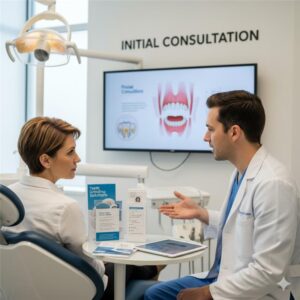
A. Initial Consultation
The treatment commences with the thorough evaluation of your teeth, bite, or jaws by an expert dentist. Also, he will investigate your dental record, routine behaviours, medications, sleep patterns, and your inherited tendency to develop teeth-grinding issues. You can get the maximum out of this consultation by preparing a symptoms or queries draft to be asked in the preliminary session.
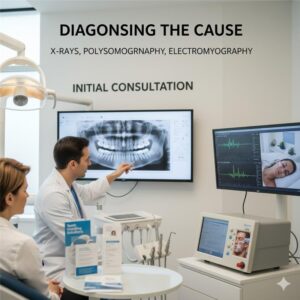
B. Determining or Diagnosing the Cause
This step involves the identification of the driving factor of bruxism. The means that are utilized for cause-determining involve:
- X-Rays– to pinpoint jaw issues or dental trauma.
- Polysomnography– referred to as sleep studies to monitor nighttime clenching and screenings to identify sleep-associated conditions, like sleep apnea.
- Electromyography (EMG)– to assess jaw muscle mobility.
C. Personalized Treatment Approach
The dentist crafts a specialized treatment approach followed by the initial evaluation. The options he might propose include:
- Protective Devices– to restrict tooth deterioration, custom mouthguards or occlusal splints are designed.
- Medications can be administered to ensure essential muscle relaxation.
- Botulinum toxin (Botox) Injections can be employed in critical cases to ease the excessively active muscles without affecting facial expressions.
- Routine Modifications– that involve managing stress, ensuring optimal sleep practices, and restricting alcoholic or caffeinated stimulants.

D. Referral to Experts
If it is determined by a dentist that your teeth grinding is associated with other health ailments, then you will probably be referred to:
- Sleep Specialist– to address sleep-associated conditions, such as sleep apnea.
- Mental Health Professional- to equip you with effective measures for handling stress, anxiety, and other psychological concerns.

E. Continuous Monitoring
It is crucial to monitor the progress and acquired effectiveness of the treatment via:
- Frequent dental visits to track your oral vitality.
- Modifying therapy, mouthguards, or medications if required.
- Documenting teeth grinding episodes.
Post-Treatment Instructions
Though it cannot be prevented, especially while sleeping, still, the following measures can be adopted to minimize the general complications:
- Engage in relaxation techniques, such as meditation, focused respiratory exercises, or low-impact exercises.
- Restrict yourself from consuming recreational substances, alcohol, or smoking.
- Practice being conscious of relaxing your jaw muscles whenever you find yourself grinding your jaw during the day.
- Reach out to your dentist regularly to timely treat your tooth damage.
Teeth Grinding Treatment Options
Our treatment encompasses the following approaches:
a. Dental Appliances
- Custom Nightguards or Mouthguards: It involves the application of dental guards that act as a cushion or a protective layer on your teeth to reduce the grinding process.
- Orthodontics: It entails the correction of misproportioned teeth with aligners or braces to reduce tooth chafing.
- GNM Orthotics: These are the personalized dental appliances to ensure jaw stabilization and relieve TMJ distress.
- Prosthetic Restorations: Encompasses the utilization of dental restorations (crowns, veneers, bridges) to restore damaged teeth and chewing in critical cases.
b. Physical & Therapeutic Approaches
- Myofunctional Therapy: it comprises those exercises that strengthen facial muscle coordination, correct tongue position, and encourage nasal respiration.
- Neuromuscular Therapy (TENS): It relaxes jaw muscles and reinstate balance via electric impulse treatment.
- Massage and Jaw Exercises: intend to ease shoulders, neck, and jaw tightness.
- Biofeedback: It entails the management of jaw clenching behaviours through technology-assisted training approaches.
c. Behavioral & Lifestyle Approaches
- Stress and Anxiety Management: If an individual excessively performs the jaw grinding due to emotional strain, it can be effectively coped with certain techniques, such as yoga, relaxation exercises, meditation, and counseling etc.
- Sleep Hygiene and Relaxation: Developing persistent sleep patterns, restricting oneself from nicotine or caffeine, and engaging in calming activities prior to bedtime (soft music, warm showers, reading favourite favourite book, etc).
- Behavioral Modifications: Performing mouth or jaw alignment practices, holding a slight gap between teeth, and refraining from those behaviours that induce stress unnecessarily.
d. Medications
- Botox Injections: These are extremely effective in reducing an individual’s grinding appeal and related pain by weakening the hyperactive jaw muscles briefly.
- Muscle Relaxants: Brief application at sleep time to ensure jaw muscle relaxation.
- Anti-Anxiety or Antidepressant Medications: assist in regulating the emotional stimulators linked to teeth clenching.
e. Selective Grinding and Bite Adjustment
It encompasses the reshaping of certain teeth to promote bite symmetry and lessen unusual grinding. It is focused on the correct alignment of teeth to minimize unnecessary jaw strain.
Additional Tips to Prevent Teeth Grinding
- Stick to the application of cool packs or thermal compresses on the jaw region to alleviate inflammation or discomfort.
- If essential, use pain relievers like ibuprofen or paracetamol.
- Whenever you feel the urge to grind your teeth, consciously position your tongue between your teeth.
Teeth Grinding Treatment Cost in Dubai
The usual price estimation for the grinding treatment charges varies per individual requirements, generally spanning from AED 299 to AED 2,999. The ultimate cost is finalized by precisely analyzing the following individualized core factors, such as:
- Teeth grinding’s severity and frequency.
- The treatment’s timeframe and required check-up appointments.
- Individualized treatment approach (bite modifications, specific dental therapies, and personalized night guards).
- Supplementary assistance for supportive purposes.
Relief from Teeth Grinding Starts Here – Book Today!
Desire to have a renewed smile and experience a quiet night again? Enfield Royal Clinic brings you the superior solution that will put a full stop to all your concerns. Our licensed dental specialists have formulated clinically approved techniques to restore your teeth’s wellness as well as prevent them from further deterioration. No need to wait any further, and connect with our experts to begin your journey towards a relaxed jaw and sound sleep.
FAQs
Is there any probability that nerves can be impacted by the teeth clenching?
Yes, as all bodily mechanisms are coordinated, therefore, grinding induces its impact on the jaw muscles, teeth, and the facial nerves, even.
Can a certain nutrient deficiency lead to bruxism?
Yes, heightened stress or muscle tightening is generally associated with reduced levels of vitamin B5, D, or magnesium, contributing to jaw clenching.
Can bruxism entail the tendency to intensify with time?
Yes, if not addressed promptly, it can cause certain complications and end up inducing pain, oral damage, and other dental conditions.
Till when do the effects of teeth grinding treatment become apparent enough to be noticed by the client themselves?
A client will experience major pain improvements in a day or two, while complete effectiveness can be noticed within a few days.
Can cavities appear due to persistent dental clenching?
Yes, the constant teeth rubbing affects enamel and elevates the susceptibility to tooth decay and certain bacterial infections.
What is the proposed session’s interval for teeth grinding treatment?
Initially, determined by the clenching intensity, a session a week or 2 weeks apart is suggested. With improvements, it gets reduced to monthly or maintenance appointments.

Dr. Tamim Hasan
Dr. Tamim Hasan is an experienced dentist at Enfield Royal Clinic in Dubai who is widely known for his dedication to oral health, patient satisfaction, and clinical excellence. With more than 7 years of experience in offering dental care, he has built a good reputation for his precise and gentle care. Dr. Tamim offers a wide range of dental services to deal with a lot of dental issues. ...
View Profile


