

Not every skin growth is a sign of concern. Many skin outgrowths are completely benign and do not require treatment. But it can be difficult to identify which skin growth is normal, as different skin growths look very similar. Understanding the differences is important so that you don’t need to worry next time you notice any skin growth. This blog discusses 6 types of skin growths and how to treat them.
6 Types of Skin Growths and How to Treat Them
Many skin growths are harmless but you should ignore them. Some look identical but need completely different treatment.
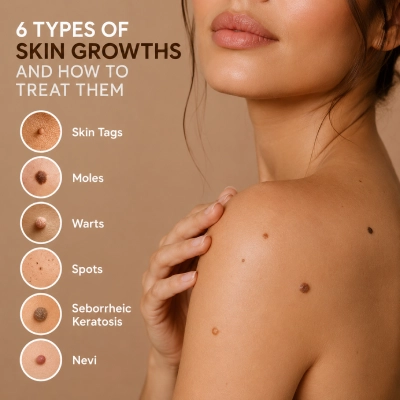
Below are 6 types of skin growths and how to treat them:
1. Skin Tags
Skin tags are small, soft pieces of skin with a thin stalk. They often occur in places where skin rubs against skin. Due to constant friction, extra skin cells grow in different areas of the body. They are not cancerous and don’t hurt.
Treatment:
If the skin tag becomes painful or causes trouble, a dermatologist can:
- Cut it off with surgical scissors
- Freeze it with cryotherapy
- Remove it with electrocautery, which uses electric heat to remove the tissue
2. Warts
Warts are rough skin growths caused by viral infection. The human papillomavirus (HPV) enters the skin and causes cells to multiply faster than normal. They commonly occur on the hands and fingers. Warts can spread to others through direct contact or by sharing items.
Treatment:
Treatment becomes important when warts persist, and it can include:
- Salicylic acid
- Cryotherapy, which freezes the extra tissue until it dies
- Laser treatment or minor surgical removal
3. Moles
A mole develops when pigment-producing cells do not grow evenly. Most moles are harmless. They can be flat or raised and occur in different colors, from brown to almost black. The number of moles on the skin is not concerning until they begin to change.
Treatment:
Most healthy moles don’t need removal. If a mole looks concerning, it will need professional treatment and laboratory tests. For a normal mole that bothers you cosmetically, doctors will recommend surgical removal.
4. Seborrheic Keratosis
This type of skin growth is the most common in adults over 40. They look like a drop of brown or black wax on the skin. The surface feels rough or slightly crumbly. It appears to be growing on the surface of the skin rather than from inside. These growths are completely benign.
Treatment
A dermatologist may remove it using:
- Cryotherapy
- Curettage, which gently scrapes the growth away
- Electrocautery
- Laser treatment
5. Epidermoid Cysts
An epidermoid cyst slowly grows beneath the skin. It forms when the skin cells become trapped instead of shedding normally. Most cysts don’t hurt. Pain usually means the cyst has become infected.
Treatment:
Small and harmless cysts may not need treatment. If it becomes infected, doctors may recommend suitable care. The doctor will remove the entire cyst wall if surgery is needed.
6. Actinic Keratosis
A rough, scaly patch caused by years of UV damage from the sun. These spots usually appear in areas that are exposed to sunlight. They often feel rough before they are easy to see. Unlike other growths, they need quick care.
Treatment:
Treatment options include:
- Cryotherapy for individual spots.
- Prescription creams that destroy damaged skin cells.
- Photodynamic therapy
Frequently Asked Questions
Can skin growths be removed without surgery?
Yes, Many skin growths can be treated without surgery. Your dermatologist recommends the suitable treatment based on the specific case. Modern treatments are effective in treating skin growths without traditional surgery.
Can I remove skin growth at home?
It’s not a good thing to do. Always make sure to see an expert rather than treating yourself.
Book Your Consultation
Visit Enfield Royal Clinic and consult board-certified dermatologists for your skin concerns. If you feel concerned about your skin growths or are seeking expert treatments, this is the right time to see a trusted specialist. Book your free consultation today.